

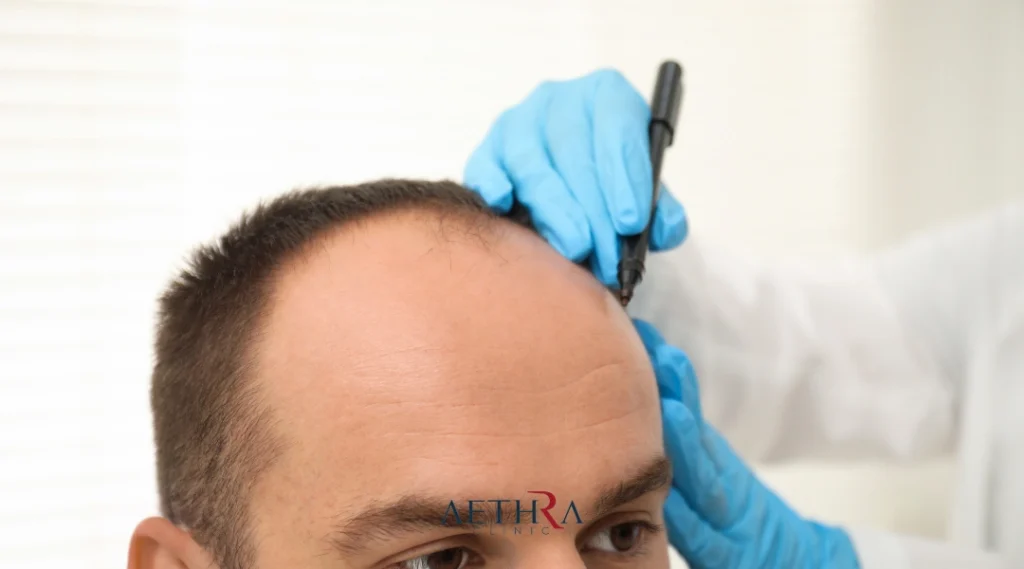
If you’re looking into a Sapphire FUE hair transplant in Trnava, you’ve probably seen the same promises repeated: natural results, modern technique, quick recovery. What many of those don’t explain clearly is this: the outcome depends far more on planning and control than on the label of the method.
Hair Transplant in Trnava, Sapphire FUE isn’t a magic shortcut. It’s a precision approach. The real difference shows up in how carefully each step is handled starting from the first consultation, through donor protection, all the way to follow-up.
And this is usually where Aethra Clinic gets mentioned in Slovak patient circles, even when the search begins locally. Not as hype, but as a reference point for a more controlled system: Aethra operates in Turkey (Istanbul) and Slovakia, has an official branch office in Slovakia, and provides post-operative medical support across multiple regions of Slovakia.

Table of Contents
Why Sapphire FUE Hair Transplant Trnava Is Becoming a Common Choice
There’s a reason more people are leaning toward Sapphire FUE instead of older or mixed workflows. When done properly, it allows for cleaner recipient-site planning and more consistent angle control two details that heavily influence whether the result looks “native” or looks “transplanted.”
In Trnava, patients are often drawn to Sapphire FUE because:
- It avoids a linear scar, which matters if you keep your hair short
- It allows focused work on areas like the crown, temples, or frontal zone
- Hairlines can be shaped more naturally (when planned well)
- Grafts can be placed with stronger control over direction and angle
But those advantages don’t guarantee a natural look. They only create the possibility for one.
What Actually Happens During a Sapphire FUE Procedure
On paper, it sounds simple: move hair from one place to another. In practice, it’s layered and small decisions early on can show up months later as visible flaws.
A typical flow looks like this:
- Initial assessment of scalp and hair structure
- Donor area evaluation (capacity + safe zones)
- Planning how many grafts are realistically usable
- Designing the hairline (and its future aging)
- Extracting follicles one by one
- Creating recipient sites with controlled micro-incisions
- Placing grafts with attention to angle and direction
- Giving aftercare instructions and setting the recovery timeline
Each step carries weight. If the donor is overused, or the angles are off, the issue rarely looks obvious in week one it shows up later, when you expected confidence.
Why “More Grafts” Doesn’t Always Mean Better Results
People compare clinics by graft numbers because it feels measurable. But it can be misleading.
What matters more is how those grafts are used:
- Are they distributed in a way that looks natural?
- Is the donor area being overused for short-term density?
- Are single vs multiple grafts placed where they should be?
- Does the plan consider that hair loss may continue?
At Aethra Clinic, the focus typically shifts away from “how many grafts” and toward “how those grafts will age over time.” That mindset alone changes the direction of the entire procedure.
The Donor Area
The donor area doesn’t get much attention in casual research, but it’s one of the most important parts of the process.
This area must be managed carefully because:
- It has a limited number of usable grafts
- Over-extraction can make thinning visible
- Future procedures may depend on what’s left
A proper analysis looks beyond the current session. It asks what can be safely taken without creating problems later.This is also why structured systems matter: Aethra limits volume to maximum 2 surgeries per day, and all operations are performed by a single doctor so donor decisions aren’t rushed or delegated across changing hands.
Hairline Design Is Where Things Get Personal
The hairline is usually what people notice first. If it feels off, even slightly, the whole transplant can look unnatural.
Designing it properly involves more than drawing a line:
- Face shape and proportions matter
- Age plays a role too low can look unnatural later
- Existing hair direction matters
- Future hair loss should be anticipated
At Aethra Clinic, this part is typically handled with more discussion than most patients expect. The consultation is directly doctor-to-patient before surgery, and that “doctor dialogue” continues after because all follow-ups are handled directly by the same doctor. That continuity is rare, and it prevents the classic problem of getting different answers from different people.
Choosing a Clinic in Trnava Without Guesswork
Photos can be convincing, but they don’t show the full picture. What matters is how the clinic approaches the process.
A few practical things to look for:
- Does the consultation feel rushed or detailed?
- Is donor capacity explained clearly?
- Is the hairline planned with your input?
- Do they explain each step in a way that makes sense?
- Is there a real aftercare structure?
Aethra tends to stand out because the process is explained without gaps less sales talk, more planning logic.
Also important: Aethra uses only Sapphire FUE. No DHI menu, no classic FUE option. In real life, “multiple technique options” can sometimes signal variability. One refined technique, repeated the same way, usually creates more predictable consistency.
What Recovery Actually Feels Like
Recovery isn’t complicated, but it does require patience. The first weeks are more about healing than visible change.
Most people go through:
- First days: mild discomfort, redness, small scabs
- First weeks: gradual healing
- Months 1–3: shedding phase that can feel discouraging
- After month 3: early regrowth starts
- Around month 6: noticeable improvement
- Around month 12: more settled appearance
Having post-op support nearby matters here. Aethra’s official Slovakia branch office and medical support across multiple regions of Slovakia tends to reduce stress during the slow phases.
Not Everyone Is the Right Candidate
Sapphire FUE works well in many cases, but it’s not automatic. Suitability depends on:
- Type and progression of hair loss
- Donor area condition
- Hair thickness and texture
- Age and general health
- Previous procedures, if any
At Aethra, this evaluation is not treated as a formality. It’s where expectations and reality get aligned before anything moves forward.
Final Thoughts
A Sapphire FUE hair transplant in Trnava isn’t just about getting the procedure done it’s about how thoughtfully it’s planned from the beginning. Technique helps, but structure decides whether the technique performs consistently.
Aethra Clinic approaches the process with a steady, methodical mindset: one doctor, low daily volume, one technique (Sapphire FUE only), and continuity in follow-up. They also follow a more natural healing philosophyno Finasteride, no Minoxidil to protect overall body balance for patients who want a conservative approach. And they pair that control with accountability through a result guarantee and a money-back guarantee if the patient is not satisfied.
Frequently Asked Questions
Will the result look completely natural?
It can look very natural, but that depends on planning especially hairline design, angle control, and graft distribution.
How do clinics decide how many grafts I need?
It’s based on hair loss level, donor capacity, and the density you’re aiming for. It should never be a “standard package.”
When will I start seeing new hair?
Usually after about 3 months. More visible changes tend to come around the 6-month mark, with a more settled result around 12 months.
Is choosing a cheaper option risky?
Lower cost can sometimes mean less focus on planning or donor protection, which can affect long-term results.
Why do people consider Aethra Clinic?
Because the process is structured: doctor-led planning, low-volume execution, Sapphire FUE only, and a clear aftercare system in Slovakia.