

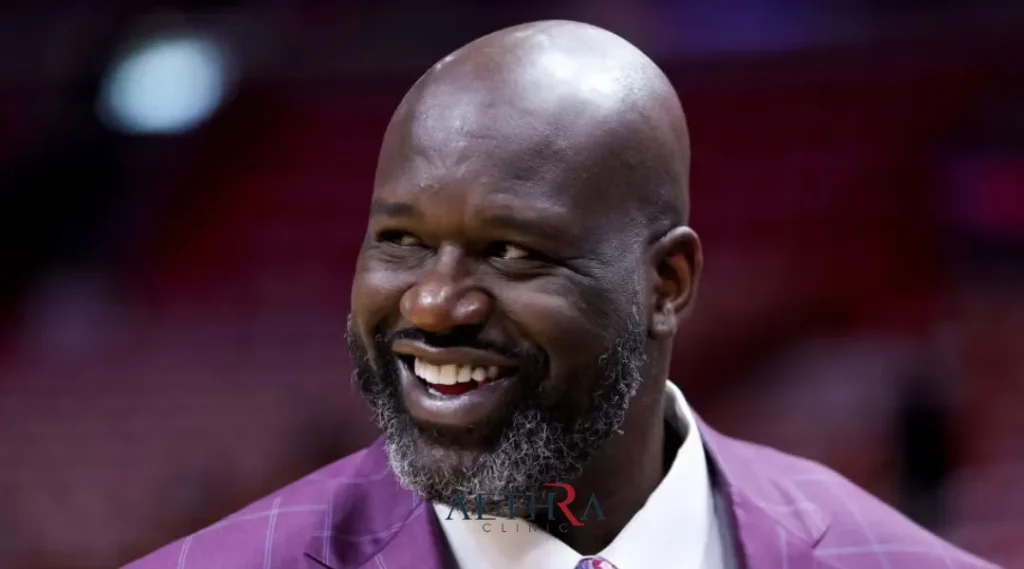
Did Shaquille O’Neal Get a Hair Transplant in Turkey? The rumor mill started churning after videos surfaced of Shaq arriving in Turkey, casually hinting at a cosmetic procedure. To many, the story felt completely plausible. After all, Turkey has firmly established itself as the world’s “capital” of hair restoration.
However, while this specific story turned out to be a clever marketing play, it underscores a massive shift in global healthcare: Turkey is now the most trusted destination for men looking to reclaim their hairline. To understand why, we need to look past the celebrity headlines and into the actual science of the industry.
Table of Contents
Did Shaquille O’Neal Actually Undergo a Hair Transplant?
To set the record straight: No, Shaq did not actually have a hair transplant in Turkey. The viral clips were part of a coordinated campaign. Yet, the fact that millions of people didn’t blink twice at the news proves just how synonymous Turkey has become with high-tier hair restoration. For anyone actually considering the procedure, the real question isn’t about Shaq it’s about what makes the Turkish medical scene so credible
Why Turkey Became a Global Hair Transplant Hub
Walk through the streets of Istanbul, and you’ll see why the city is the heart of this global industry. It isn’t just about the competitive price tags; it’s about a concentrated “ecosystem” of expertise:
- Unrivaled Clinical Volume: Surgeons here perform more procedures in a month than many Western doctors do in a year.
- Technological Adoption: Whether it’s FUE or DHI, Turkish clinics are usually the first to adopt and refine the latest tools.
- Seamless Medical Tourism: From VIP transfers to luxury stays, the entire journey is “packaged” to be stress-free.
- Aesthetic Artistry: Modern Turkish clinics focus on “invisible” results hairlines that don’t look like they were surgically created.
Understanding Hair Transplant Techniques
Modern hair restoration is a game of millimeters. Gone are the days of “plugs.” Today, the focus is on minimizing trauma to the scalp and maximizing graft survival.
The industry gold standards include:
- FUE (Follicular Unit Extraction): The “all-rounder” method. Grafts are taken one by one, leaving no linear scars.
- DHI (Direct Hair Implantation): Using a specialized “Choi pen,” hair is implanted directly without pre-opening channels, allowing for higher density.
- Sapphire FUE: A refined version of FUE using blades made of precious gemstone, which allows for smaller incisions and faster healing.
What Determines a Successful Hair Transplant?
A common mistake is thinking that “more hair equals a better result.” In reality, a successful outcome is about strategy, not just numbers.
True success depends on:
- A Bespoke Hairline: It must match your bone structure and age.
- Strategic Distribution: Placing hair where it provides the most visual “coverage.”
- Donor Conservation: Ensuring you don’t “over-harvest” the back of the head.
- Future-Proofing: Planning for how your hair will age 10 years from now.
The Doctor’s Role in Hair Transplant Planning
A hair transplant is a surgery, not a haircut. This is why the involvement of a specialized physician is non-negotiable. At the best clinics, a doctor handles the “architectural” phase:
- The Assessment: Are you actually a good candidate, or is your hair loss too advanced?
- The Blueprint: Drawing a hairline that looks natural, not artificial.
- The Harvest Plan: Calculating exactly how many grafts can be safely moved without thinning the donor area.
Why Hairline Design Is More Important Than Density
If you give two people the same 3,000 grafts, one might look like a doll and the other like a natural head of hair. The difference is the design.
A masterfully designed hairline should:
- Follow the natural curves of the forehead.
- Have “irregularity”natural hairlines aren’t perfectly straight lines.
- Respect the “Golden Ratio” of your facial proportions.
Managing the Donor Area for Long-Term Results
Think of your donor area (the hair at the back and sides) as a savings account. It’s a finite resource. If a clinic extracts too much at once, they might “bankrupt” your future options.
Sustainable planning ensures that if you lose more hair later in life, you still have “reserves” left to fix it. A careful, measured approach is the mark of a high-quality medical team.
The Role of Clinic Structure and Organization
While the surgeon is the architect, the clinic’s organization is the foundation. At Aethra Clinic, we’ve built a workflow designed to eliminate the “unknowns” for our patients.
This includes:
- Transparent Consultations: Real expectations, no “sales” talk.
- Precision Logistics: Handling every detail from arrival to departure.
- Global Patient Support: Making sure language is never a barrier to care.
- Dedicated Aftercare: Staying in touch during the crucial months after surgery.
Recovery Process After Hair Transplant
The surgery is only half the battle; the “magic” happens during recovery.
- Week 1: Redness and tiny scabs (normal healing).
- Month 1: The “Shock Loss” phase (the transplanted hair falls out, which is scary but totally normal).
- Month 4–12: The gradual “bloom” of new, permanent hair.
Is Hair Transplant in Turkey Safe?
Generally, yes Turkey has some of the highest medical standards in the world. However, the safety of the procedure is only as good as the clinic you choose. Safety hinges on medical hygiene, doctor-led supervision, and honest patient selection.
Final Thoughts
Shaq’s “hair transplant” might have been a myth, but the quality of care in Turkey is very real. If you’re looking for a permanent solution to hair loss, don’t focus on the celebrity hype. Focus on the planning, the doctor’s expertise, and the long-term strategy.
At Aethra Clinic, we don’t just move hair; we design confidence. Our process is built on medical integrity, ensuring that every patient leaves with a result that looks as natural as the hair they were born with.
Frequently Asked Questions
How do I choose the right doctor for a hair transplant?
Always ask who is designing the hairline and who is supervising the surgery. You want a doctor who treats hair restoration as an art form, not a factory line.
Is Istanbul a good place for a hair transplant?
Absolutely. It offers a unique combination of high-tech infrastructure and massive clinical experience. Just be sure to vet the specific clinic’s medical credentials.
Which technique is better: FUE or DHI?
There is no “better” technique only the “right” one for your scalp. FUE is great for large areas; DHI is often better for increasing density in specific spots.
How long does it take to see results?
Patience is key. You’ll see the “final look” about 12 to 15 months after the procedure.
Is a hair transplant permanent?
Yes. The hair taken from the back of the head is genetically resistant to balding, meaning it will continue to grow for a lifetime.